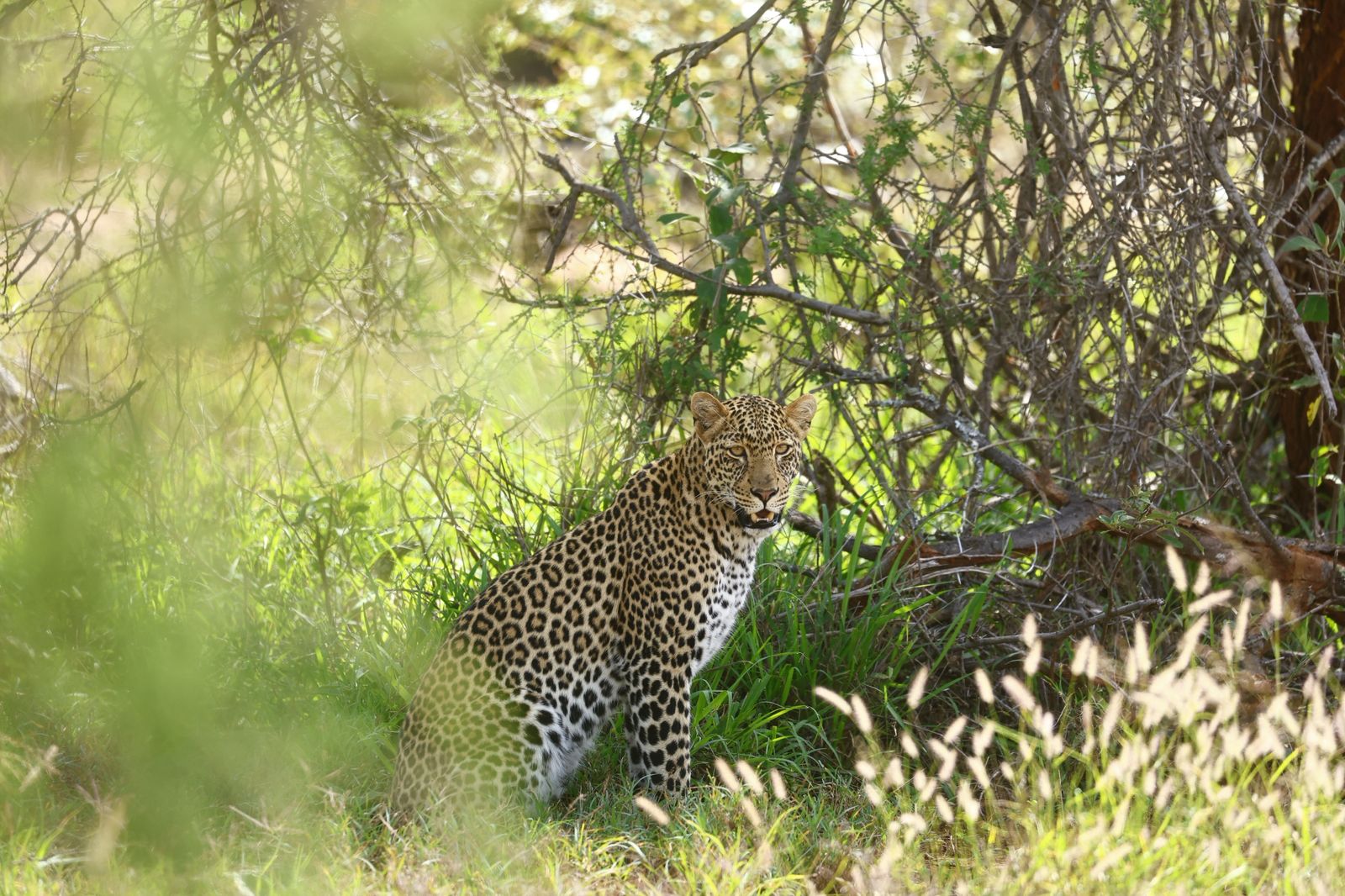
While the African Leopard is a member of the famous “Big Five,” the leopards of the Western Cape are a breed apart. Smaller, leaner, and infinitely more private, these “Cat Citizens” of the Cape Fold Mountains are the ultimate introverts of the animal kingdom.
To see one in the wild is not just a lucky sighting—it is a once-in-a-lifetime encounter with a “ghost.”
1. The “Miniature” Master of the Mountains
The first thing to know about Cape Leopards is that they are significantly smaller than their cousins in the Kruger National Park and Kenya. A male Cape Leopard weighs, on average, only about 35kg—roughly half the size of a northern leopard. This compact build is an evolutionary masterstroke, allowing them to navigate the vertical, rocky terrain of the Cederberg and Boland mountains with surgical precision.
2. Camera Shy by Nature
Researchers often spend years in the field without ever seeing a leopard with their own eyes. We rely almost entirely on “camera traps” to study them. These cats are so sensitive to human presence that they can detect a hiker from kilometers away, quietly slipping into a rock crevice or blending into the fynbos long before you realize you aren’t alone. They don’t just hide; they evaporate into the landscape.
3. The World’s Largest “Backyards”
Because the Cape mountains are nutrient-poor compared to the lush savannahs, prey is harder to find. This means a single male Cape Leopard requires a massive territory to survive—sometimes up to 600km². To put that in perspective, one leopard might “own” an area the size of 80,000 rugby fields. They are the ultimate solitary wanderers, patrolling their vast, silent kingdoms under the cover of night.
4. A Diet of “Dassies” and Discipline
While other leopards might take down a kudu, our local cats are specialists. Their primary diet consists of Rock Hyraxes (Dassies) and Klipspringers. They are patient hunters, sometimes sitting motionless for hours for the perfect moment to strike. This patience is a hallmark of their personality—they are never rushed, never reckless.
5. The Artist and the Apex Predator
The leopard’s shyness has made it a symbol of mystery for centuries, but for artists, it represents something even deeper: the “Spirit of the Wild.” Because they are so rarely seen, the leopard exists in the human imagination as much as it does in the mountains.
In the Cape, this relationship between art and the leopard is most poignantly captured in Hout Bay. When an animal is too shy to be seen, we create monuments to remember them. The famous bronze leopard sculpture on its granite perch overlooks the water, serving as a permanent resident where the living “ghosts” once walked.
This intersection of art and ecology reminds us of what we lose when these shy Panthera citizens disappear from Africa’s ridges.