Have you caught a glimpse of the legendary bronze leopard of Hout Bay while cruising along the breathtaking Chapman’s Peak Drive? If not, you’re missing out on a fine piece of feline art and a must-see cat tourist attraction in Cape Town!
Perched on a rugged rock in Hout Bay, this striking bronze Cape Leopard sculpture is more than a monument—it’s a mysterious symbol and a celebrated cat landmark of the Mother City steeped in local lore and wild tales.
The Story of Hout Bay’s Bronze Leopard
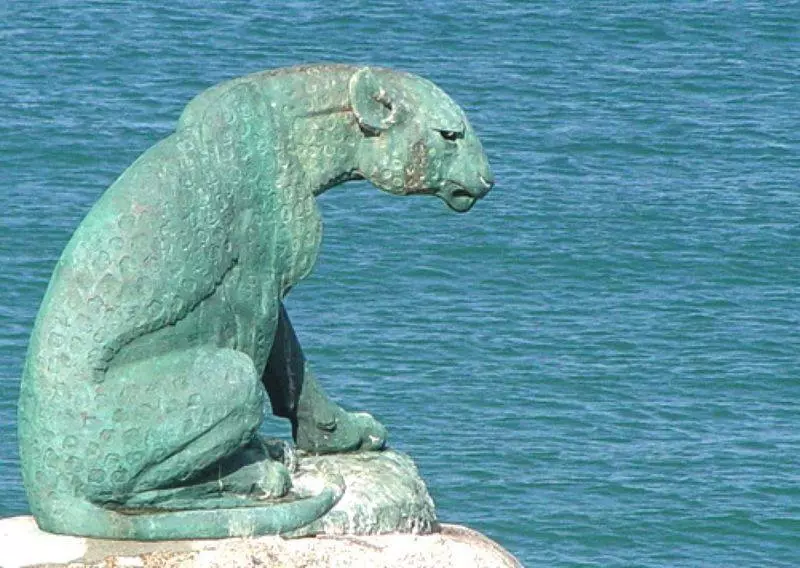
Prepare to be captivated by the striking bronze leopard of Hout Bay, a masterpiece created by the talented sculptor Ivan Mitford-Barberton and generously donated to the community in 1963. Weighing 295 kg, this fierce feline was placed on its rocky pedestal where the ocean meets land on March 14th, 2020, by the Divisional Council, with the support of Pepsi-Cola, who provided the bronze.
Symbolism In Sculpture
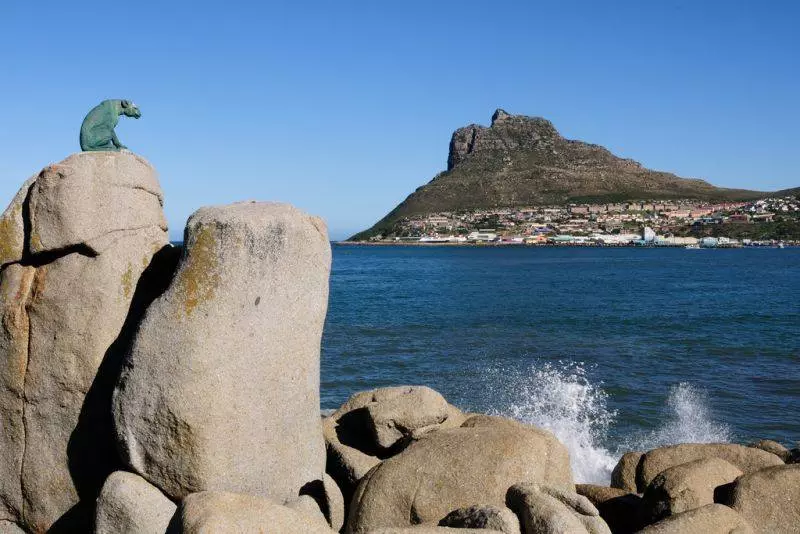
The bronze cat sculpture is a heartfelt memorial honoring the wild cats and Panthers that once roamed the mountains of the Cape Peninsula. The art piece serves as a reminder to visiting humans of the rich, untamed wilderness that once thrived here.
Once teeming with vibrant wildlife roaming freely across its breathtaking mountains and lush landscapes, the Cape Peninsula was a true haven of untamed nature. As Cape Town’s population surged and development advanced, these majestic creatures gradually disappeared, retreating to more secluded wildernesses to escape human encroachment. This dramatic shift transformed the region’s wild character forever, with the last leopard seen in Hout Bay on Little Lion’s Head in 1937 marking the end of an era of wilderness.
Today, the echoes of those wild days fuel a passion to protect and restore the Cape’s rich natural heritage. This inspires adventurers and conservationists alike to dream of a future where wildlife can once again thrive in their ancestral homeland.
Visit The Last Leopard of Hout Bay
Locals and tourists can view this secret Cape Town landmark few visitors know about from the scenic Chapman’s Peak Drive. The majestic bronze leopard’s gaze overlooks the mountainside where it’s kind once roamed free and will forever live on in history as the only leopard left in Hout Bay.
Visitors who get to view the bronze leopard in person will notice that its colour appears more blue than bronze. Over the years, the bronze colour has turned blue because of the oxidation of bronze in the salty breeze of Hout Bay.
Spotting A Real Leopard
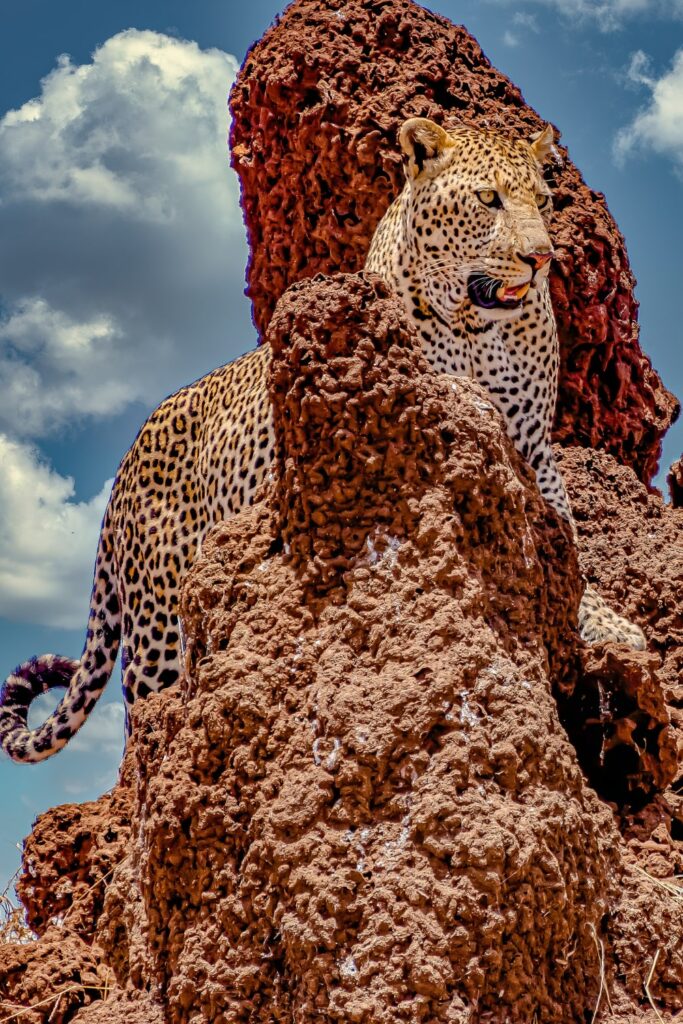
Living Leopards in the Western Cape are sometimes spotted on wildlife cameras or on the mountain slopes above towns such as Paarl, Stellenbosch, Grabouw, Gordon’s Bay, and Kleinmond in the Boland and Overstrand regions. During quieter times, these beautiful creatures often venture further down the slopes, giving lucky locals and travelers rare chances to spot a Leopard in the wild.
However, the chance to spot one of the last living members of genius Panther is rapidly diminishing. This is primarily due to human encroachment, noise pollution, and pervasive odors like exhaust fumes, all of which serve as strong deterrents. Consequently, wildlife is forced to retreat further up the slopes, seeking refuge away from human activity.
“In the Western Cape, we are incredibly lucky to still have wild leopards persisting in the mountainous regions. But as human housing and agricultural developments encroaches further on our natural areas, it puts ever greater pressure on these habitats – the homes of our wild neighbours. We should therefore all reflect on how we perceive the wild spaces around us and how we should conduct ourselves in these spaces, knowing that wildlife like leopards and so many other species were there first. Also, the actions of humans are driving them closer and closer to the edge of existence.” – Jeannie Hayward from the Cape Leopard Trust.
The threat to the leopard’s survival is compounded by human encroachment and hunting, which have led the International Union for Conservation of Nature to classify it as vulnerable. Despite its elusive and adaptable nature, the Cape mountain leopard has avoided local extinction so far. Unlike the Cape lions who disappeared in the mid-1800s. Today, only about 1,000 Cape mountain leopards remain, scattered across remote, rugged hills in the eastern, northern, and western Cape of South Africa.
Future of Cape Leopards
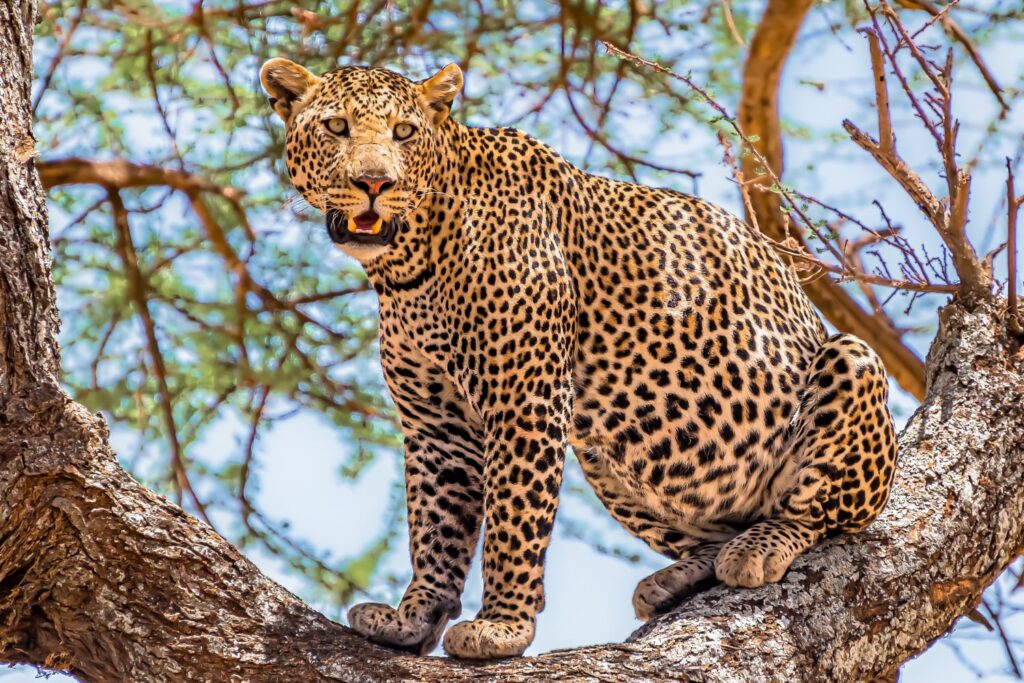
Despite the challenges faced by the Cape leopards, there is a glimmer of hope thanks to the dedicated efforts of organizations like the Cape Leopard Trust and The Landmark Foundation. The Trust’s remarkable tracking work has documented over 50 leopards in the Boland Mountains, illustrating that these majestic creatures still roam their historic habitat. Meanwhile, The Foundation’s collaborations with landowners and nature reserves have led to successful rescues, rehabilitations, and research.
These inspiring conservation initiatives show that, with ongoing dedication, community involvement, and innovative strategies, positive change is possible. Together, we can work towards securing a brighter future for Cape leopards and their fragile ecosystems. Otherwise, future generations will be left to marvel only at the solitary bronze Leopard of Hout Bay, a poignant reminder of what once was.