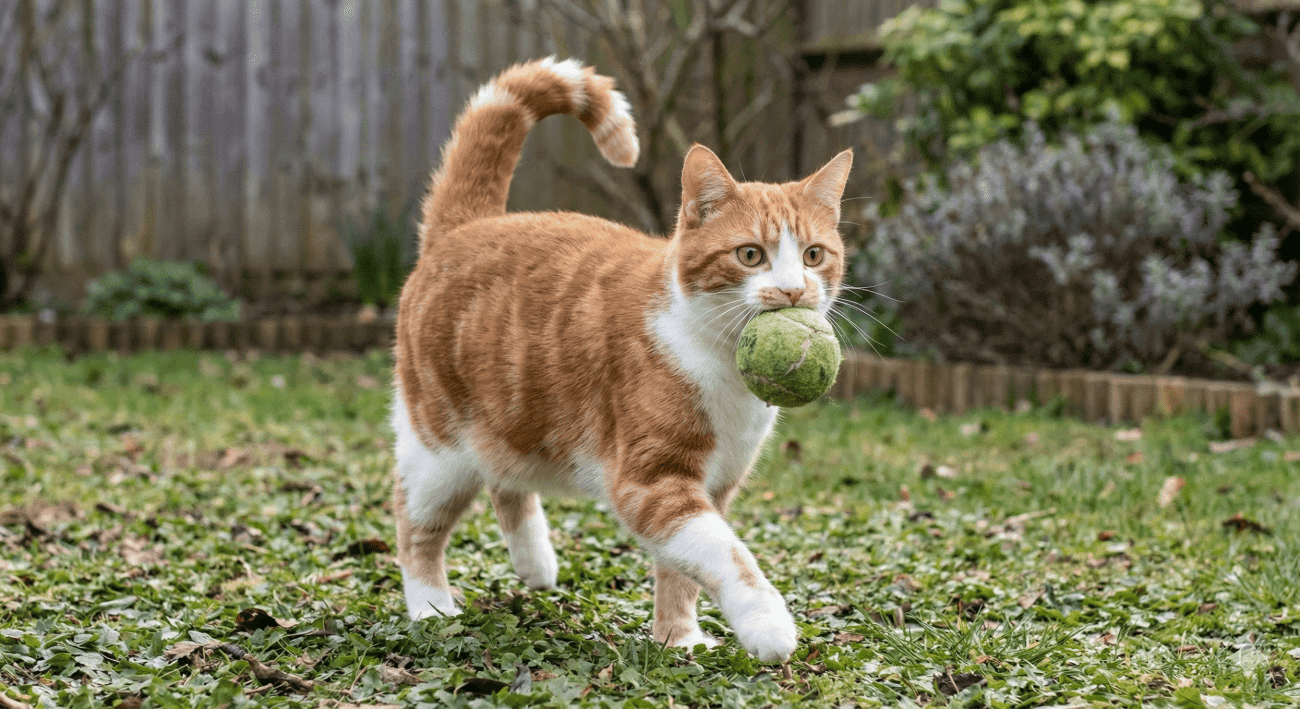
The behavior of cats fetching objects, often considered a rare anomaly, appears to be a minority but not an extreme one among domestic felines. While the sight of a cat retrieving a tossed item—like when a cat named Calvin surprised his owner, Wu, by bringing back a yarn puff—can be “gobsmacked” worthy, this playful interaction is more common than popular perception suggests.
Fetching Prevalence: The Numbers
- 1986 Study Data: One early study conducted in 1986 on cat behavior reported that nearly 16 percent of cats were observed or reported by their owners to engage in fetching behavior.
- Newer Estimates: While concrete, large-scale data remains limited, subsequent anecdotal evidence and newer, albeit smaller, observations suggest that the actual percentage of fetching felines might be higher than the 16% found decades ago.
Evolutionary Roots of Feline Fetch
Unlike domestic dogs, which were selectively bred over millennia for cooperation and behaviors like retrieving, fetching is not a regular occurrence in the wild for most animals. The spontaneous nature of the behavior in a subset of cats, however, makes sense from an evolutionary and behavioral perspective.
According to evolutionary biologists, fetching is essentially a sequence of four innate feline actions:
- Looking: Identifying the prey/object.
- Chasing: The predatory pursuit.
- Grab-biting: Securing the “prey.”
- Returning: Bringing the object back.
The first three steps are already foundational elements of a predator’s classic hunting repertoire. The final step, returning the object, is believed to be derived from two natural feline behaviors:
- Parental Instinct: Feline mothers often bring live or stunned prey back to their kittens to instruct them on hunting techniques.
- Safe Dining: Both male and female cats exhibit the behavior of moving food to a safer, more secluded area before consuming it.
Breed-Specific Fetching Tendencies
Research and anecdotal evidence suggest that certain cat breeds are significantly more prone to fetching than others.
Cat-Initiated Play vs. Dog-Owner Dynamics
A key distinction between canine and feline fetching lies in who initiates the game:
- Cats: Most fetching observed in felines is self-initiated. The cat is choosing to play and often brings the item to the human, effectively inviting the interaction.
- Dogs: While dogs enjoy the chase, the average canine is often motivated by a deep-seated desire to obey and please their human owners, a trait ingrained through domestication.
For owners lucky enough to experience it, this cat-initiated fetching is deeply meaningful. When a cat “explicitly invites” a human to play, it transcends the typical care-provider relationship (food, water, vet care). It represents a feline choice to not only have fun but to share that intimate part of their universe with their chosen human.