
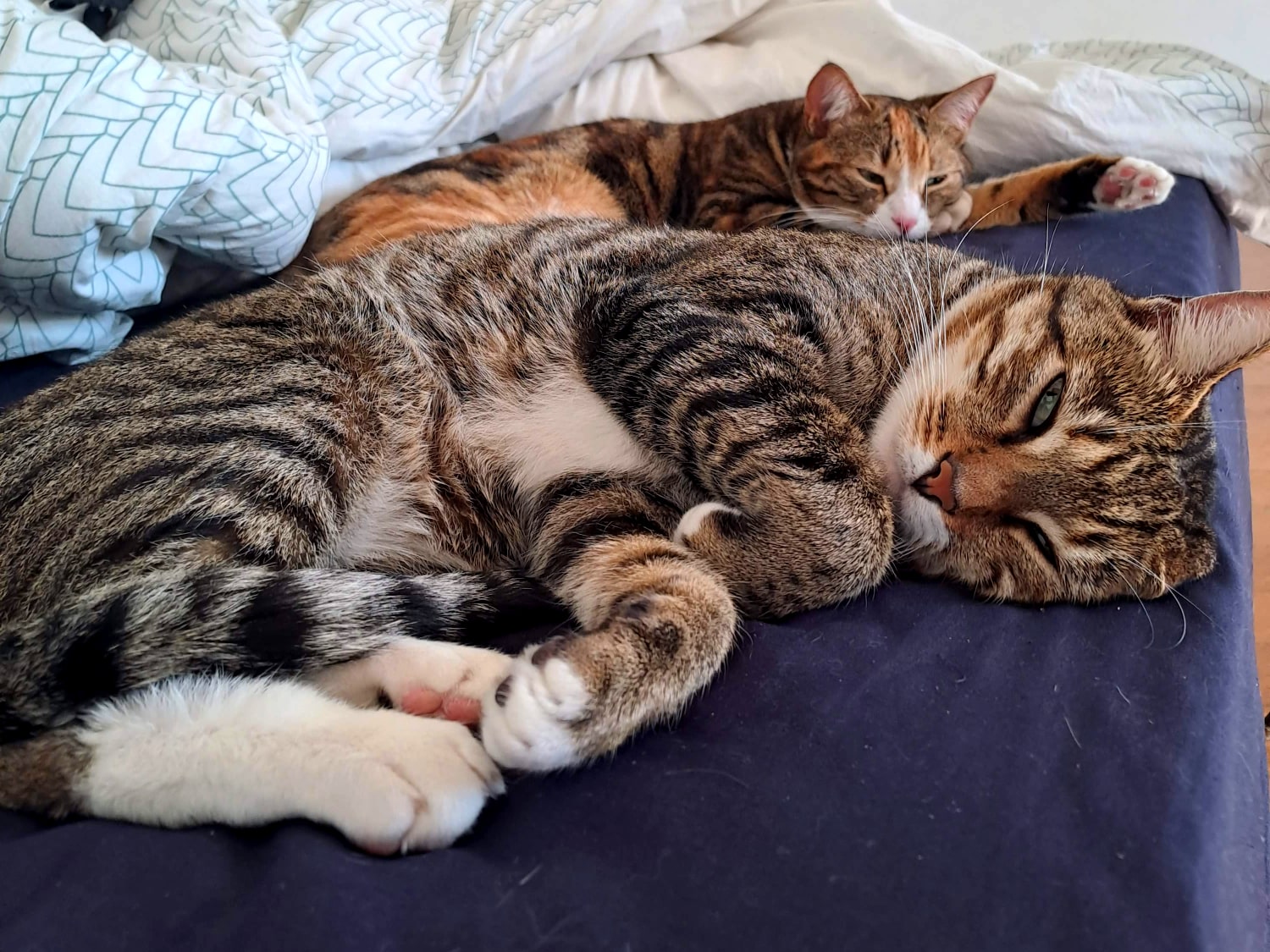
Even long-time feline owners might not realize that their cats fall asleep on their left side, a curious pattern uncovered by scientists studying the sleep behaviors of domestic pets. Through their research, the wise men identified this intriguing tendency and traced its origins to neurological factors rooted in the brain.
Turns out the majority of cats on earth prefer resting and sleeping in elevated or secluded spots, such as boxes, to feel safe from predators and overly attentive cat parents. It provides felines with a sense of security and privacy. Scientists suggest that their preference for sleeping on one side may stem from similar instincts. This intriguing hypothesis was explored in a recent study conducted by researchers at Ruhr University in Germany.
Cat experiments
As part of the study, the scientists watched 408 carefully selected YouTube videos in which the authors filmed sleeping cats. The search for relevant materials utilized the keywords “sleeping cat,” “cat nap,” and “napping cat.”
The findings revealed that over half of the cats (266) preferred sleeping on their left side, whereas 142 favored sleeping on their right side.
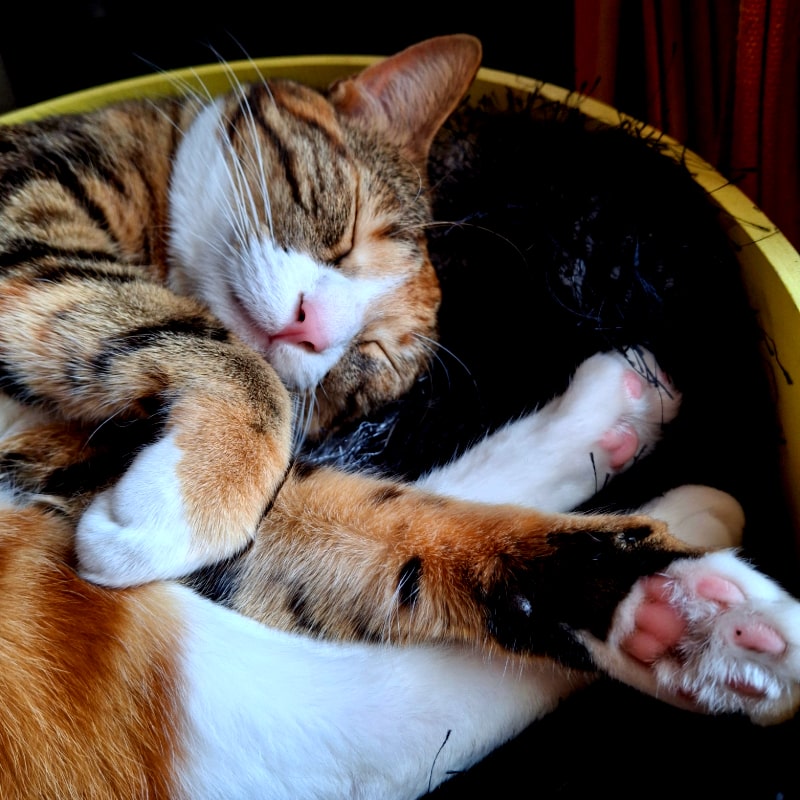
Scientists believe that this is due to interhemispheric asymmetry of the brain – a feature of the structure and functioning of the brain, in which the left and right hemispheres perform different functions. It is present in both vertebrates and invertebrates: for example, cats can be right-handed or left-handed (preference for one paw can be noticeable, for example, while eating or playing with a teaser). This “bias” is necessary to increase the efficiency of information processing and adaptation of the body to environmental conditions. Brain asymmetry allows animals to quickly respond to various stimuli, be it danger, the search for food, or interaction with representatives of their own species.
The right hemisphere is usually associated with the left visual field, and it is responsible for spatial perception, threat recognition, and quick reactions. By choosing the left side for sleeping, cats do not block the visibility of the left eye with their body, and in the event of a sudden detection of danger, they can immediately react to it.
Onur Gunturkun, a Behavioral Neuroscientist and lead Author of the study, claims “Sleep is one of the most vulnerable states for an animal, as vigilance against predators is sharply reduced, especially in the deep sleep phase. Our study showed that the shift in body position to the left during sleep in cats could be due to evolution and hemispheric asymmetry in threat processing.”
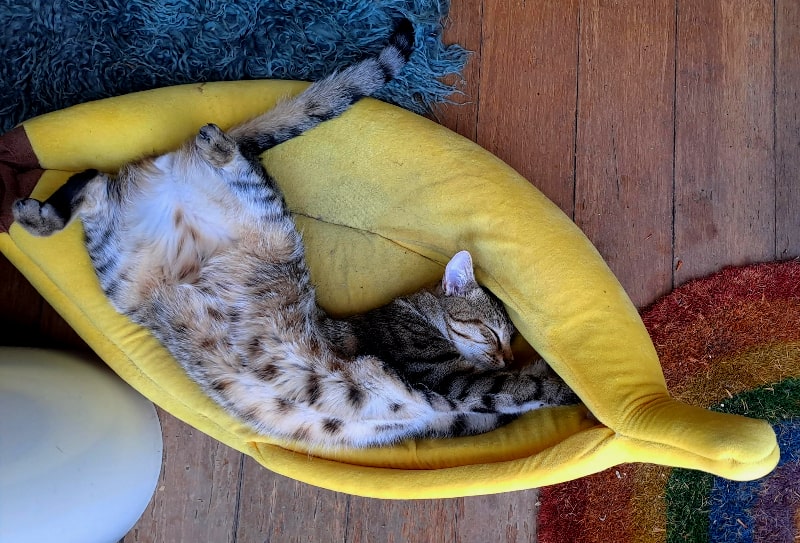
While other factors such as paw dominance or simple habits may also influence such behavior, this discovery nonetheless provides a valuable opportunity to explore the intricate biological traits that likely once contributed to the survival of the Felidae family and their wild ancestors.